Manager Enablement & Leadership Development
How I partnered with HR and leadership to build SandboxAQ's first manager education program, using real compliance failures, LMS data, and a custom Slack bot to drive behavior change across a distributed technical workforce.
At a glance:
74 managers trained across all business units
95% reported compliance confidence after training
80% voluntary completion on an optional async module
-
SandboxAQ had never implemented formal manager training across the organization. As the company scaled across business units including AI simulation, cybersecurity, and sensors, managers were operating without a shared baseline. Many were unaware of core policies around time tracking, sick leave, remote work expectations, and performance management.
The gaps had real consequences. Employees were going entire tenures without logging a single sick day, creating legal liability when separations occurred. Managers overseeing the residency program, which brought in interns, postdocs, and residents from academic backgrounds alongside full-time employees, faced an additional layer of complexity with specialized policies they had never been trained on. Leadership needed a solution that would work across a distributed, highly technical workforce with no appetite for generic compliance content.
My Role
Led discovery with HRBPs, collecting real stories about compliance, legal, financial, and performance failures to ground the curriculum in actual organizational patterns
Designed all presentation decks across all four modules: layout, visual design, and structure were fully mine
Co-developed facilitator scripts and curriculum content with the senior L&D program manager, drawing directly from HRBP discovery findings
Monitored LMS completion data, identified declining engagement after Module 2, and successfully pitched a structural redesign of Module 3
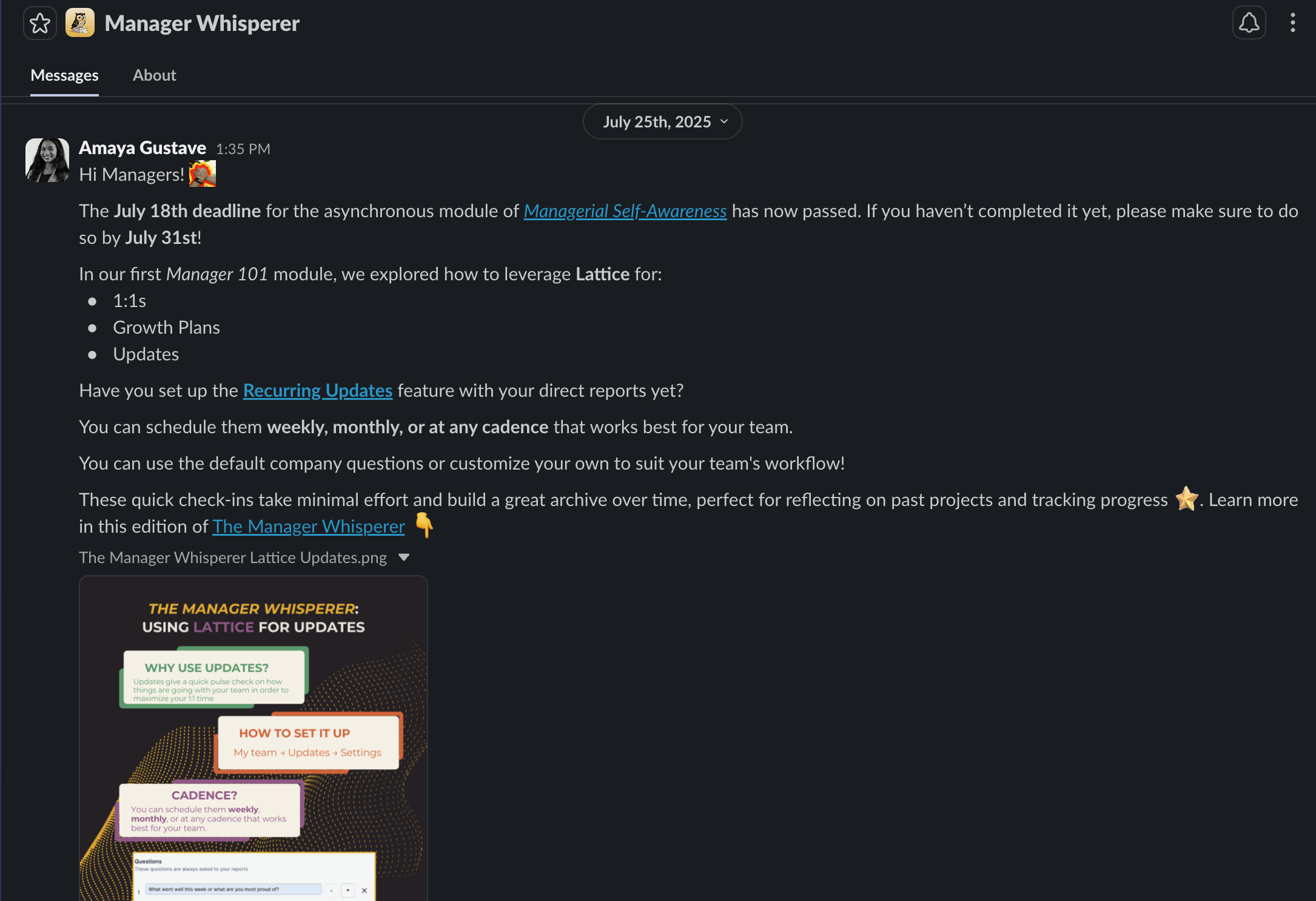
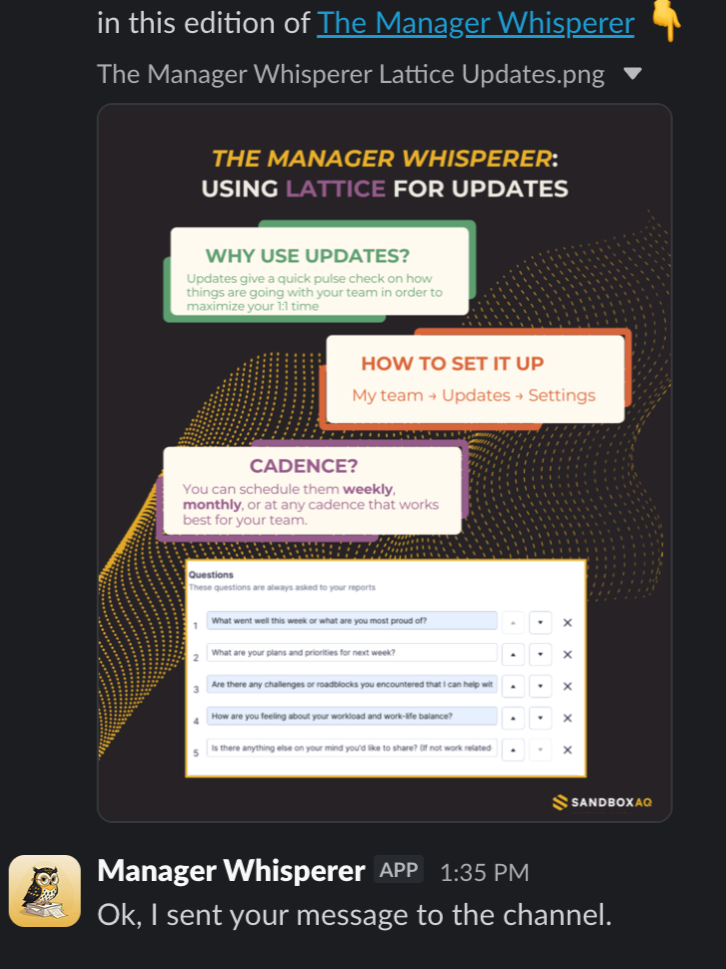
Built Manager Whisperer with IT: a custom Slack bot that delivered spaced follow-ups, did-you-knows, one-pagers, and pulse check surveys to the people manager channel after each session
Coordinated Leadership Academy, a vendor-led leadership development program, managing all logistics, scheduling, and Slack communications
The Process - Discovery Before Design

Before writing a single learning objective, I spent time with HRBPs collecting the real stories behind the gaps.
Not "managers should know policy X" but "here is what happened when they didn't." Compliance content grounded in actual incidents lands differently than content built solely on policy documents.
That framing shaped the design of every module.
The Process - A Four-Part Series Built for Different Contexts
Manager 101 was designed as four modules, not a single training event:
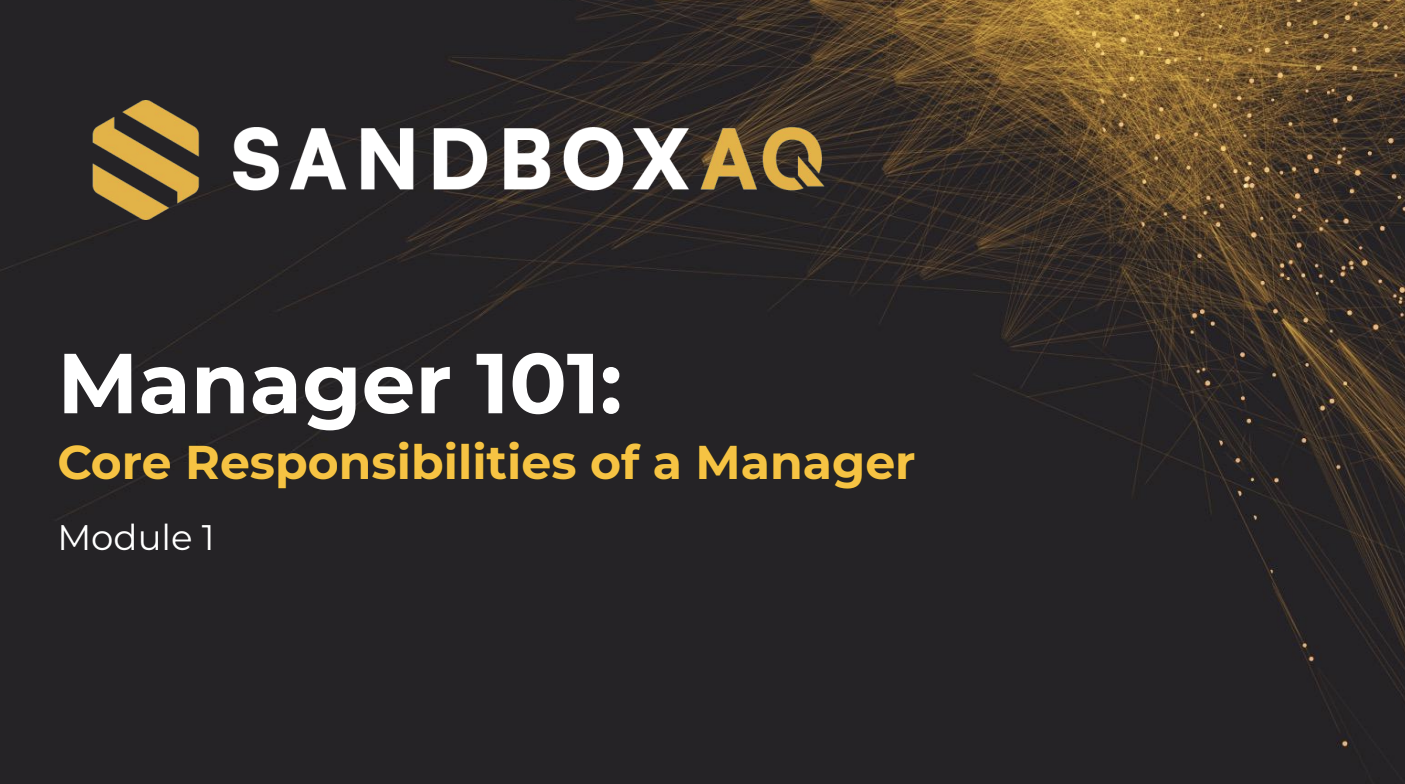
Module 1: Core Responsibilities of a Manager, live
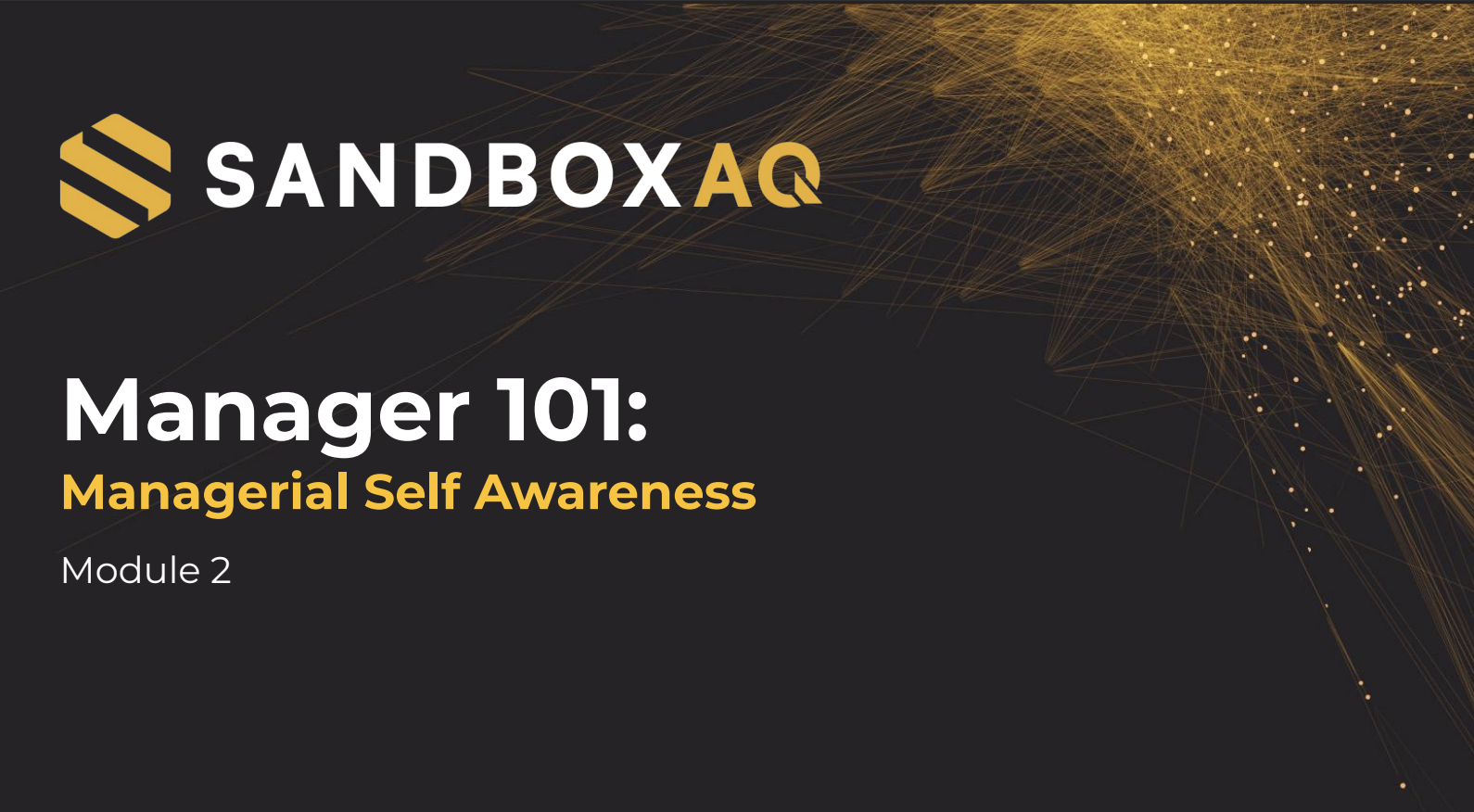
Module 2: Managerial Self-Awareness, live
Module 4: Managers of Residents, Interns, and Postdocs, live for relevant managers only
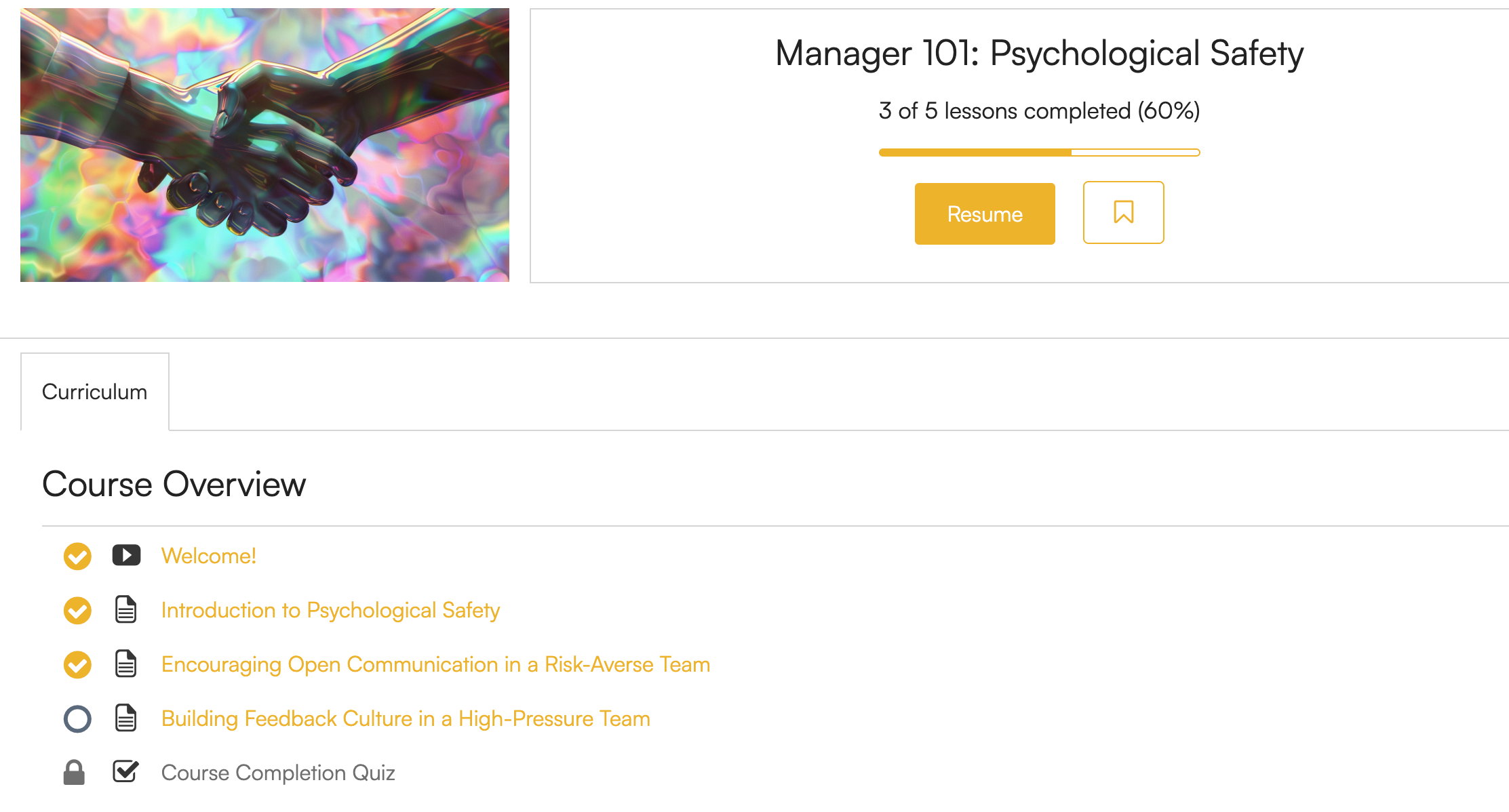
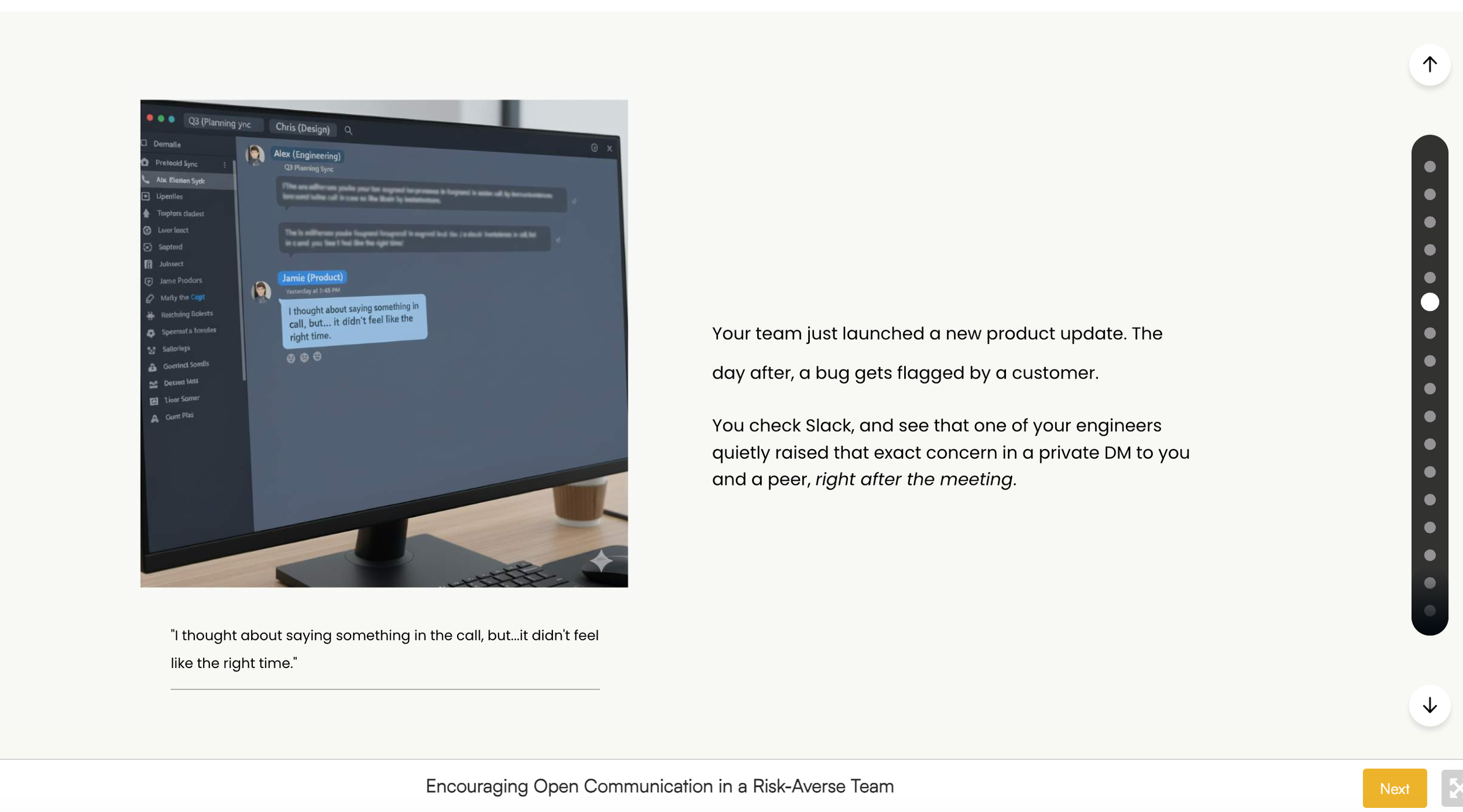
Module 3: Psychological Safety and Team Trust, async via Articulate Rise (hosted in Skilljar)
HRBPs and the senior L&D program manager facilitated the live sessions, drawing on scripts and content we developed together. I designed all decks, mixing SandboxAQ's branded visual system with lighter editorial layouts depending on the content tone.
Compliance and policy slides used the dark branded treatment. Reflection exercises, scenario practice, and coaching frameworks used a warmer, more approachable aesthetic.
The design decisions were intentional: the visual register signals to learners when they're being given a rule versus when they're being asked to think.
The Process - Measuring Understanding in Real Time
Throughout the live sessions, I incorporated live polling and open Q&A to surface what managers actually understood versus what they thought they understood.
The questions that came up repeatedly weren't just engagement tools; they became a content roadmap (and I would take note of them as they were asked live).
Patterns in what managers got wrong or asked most about in the live sessions directly informed what we prioritized in async LMS follow-ups and what we built knowledge checks around in the reinforcement modules.
The program improved across modules because we were listening.
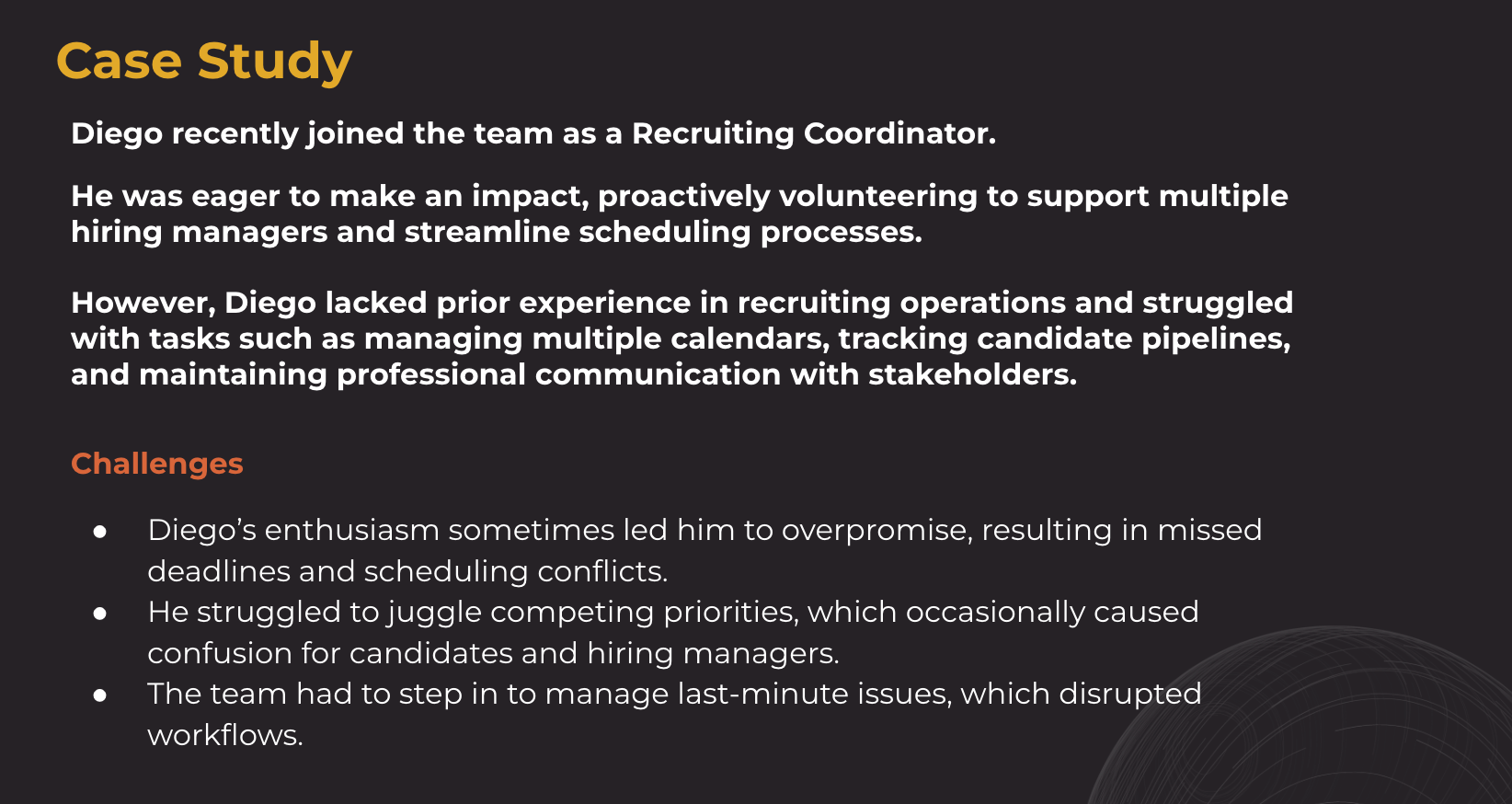
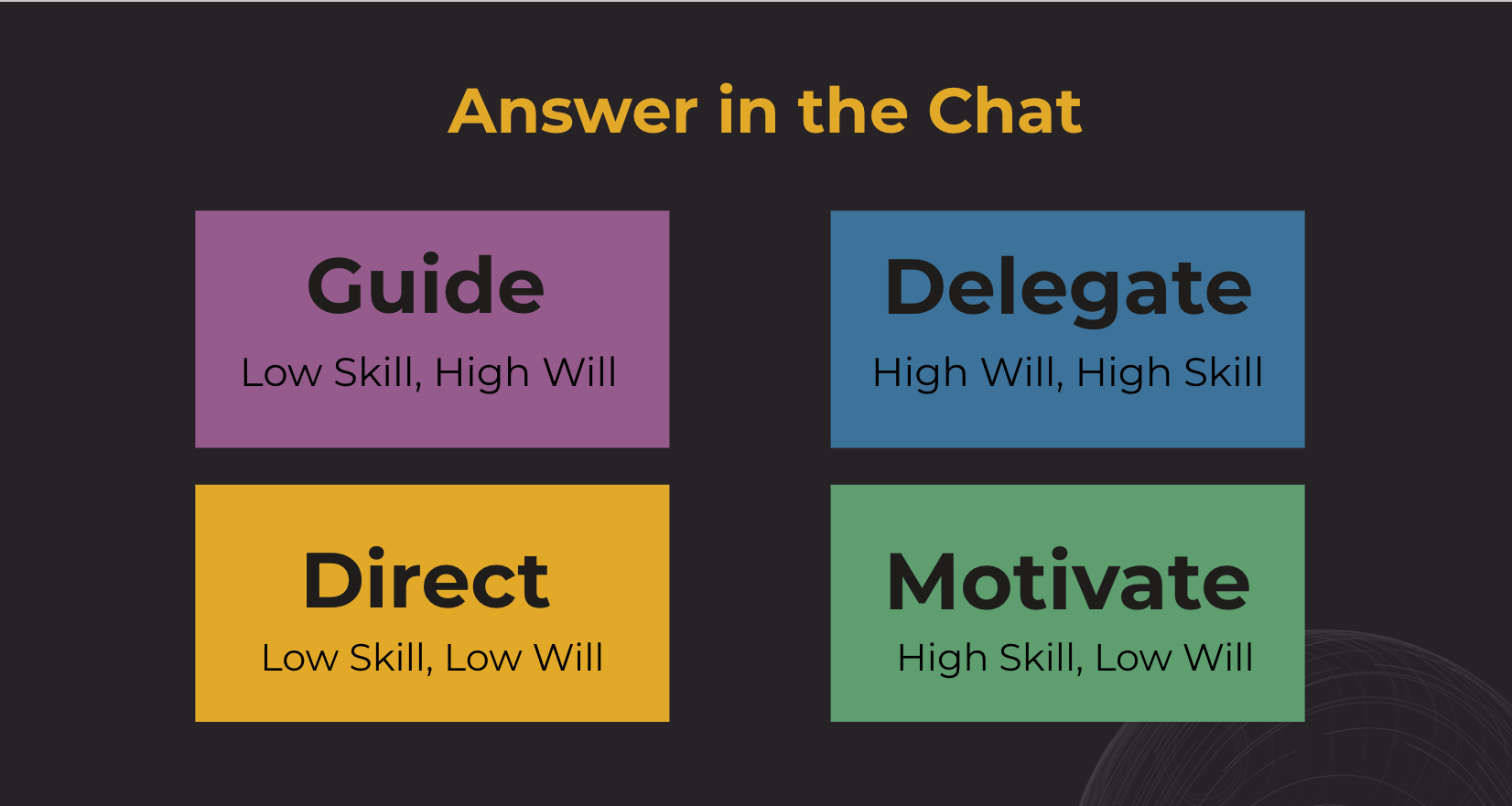
Chat response activity, Module 2: Managerial Self-Awareness
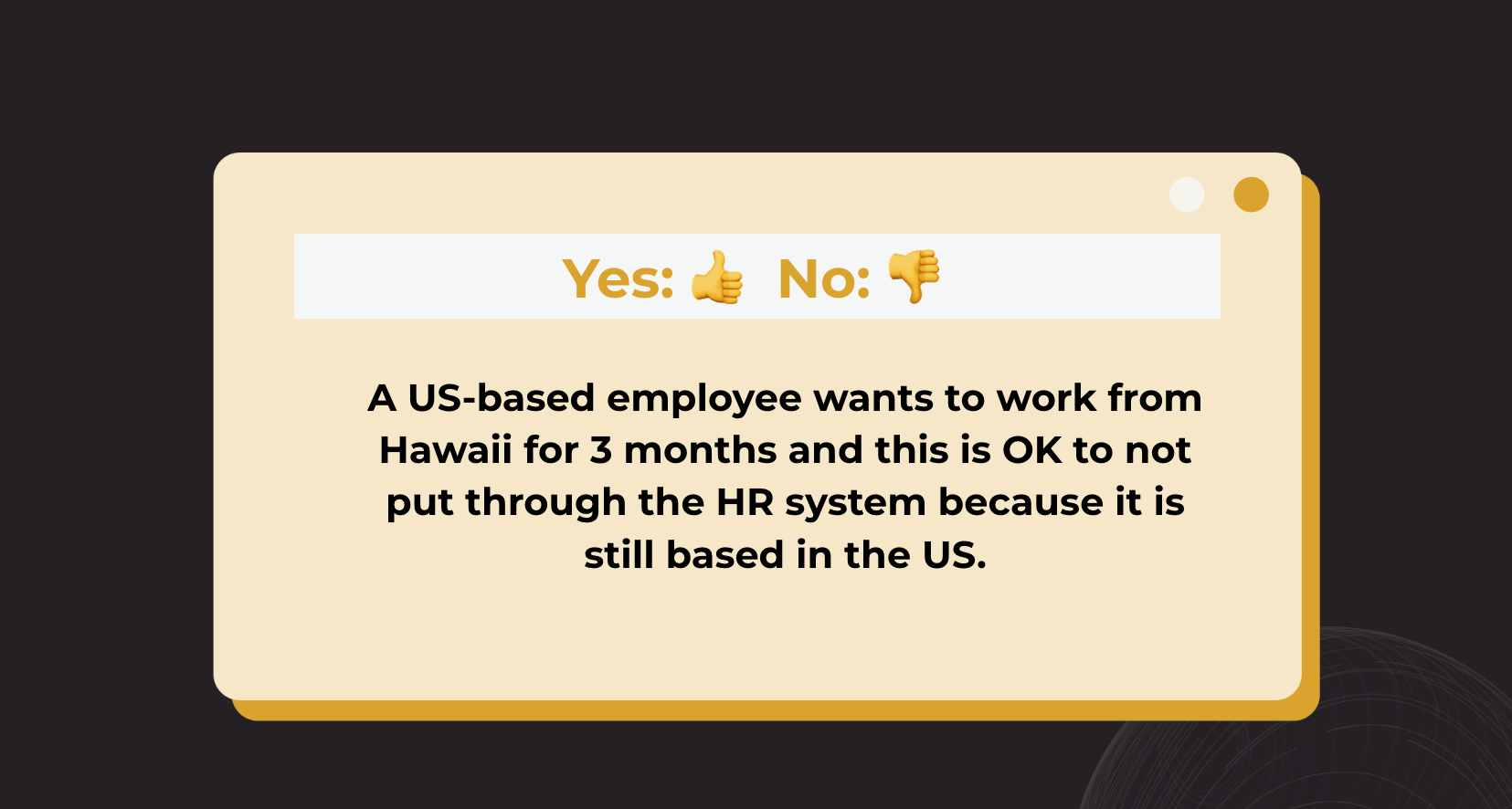
Live poll, Module 1: Core Responsibilities of a Manager
The Process - Using Data to Redesign Mid-Program
After Module 2, I noticed completion rates on follow-up activities dropping in the LMS. Rather than sending more reminders, I looked at what the data was actually telling me. Managers were fatigued, and Module 3 covered psychological safety: valuable content and, yes, based on real scenarios, but not a compliance requirement.
I pitched converting it to an optional async module in Articulate Rise. The proposal was approved.
Eighty percent of managers completed it voluntarily.
Building Manager Whisperer
Spaced reinforcement does matter, but there was a problem: every follow-up message had my or my manager’s name on it, and people were tuning it out.
I partnered with IT to build Manager Whisperer, a Slack bot connected to the people manager Slack channel. It delivered follow-up content, did-you-know prompts, one-pagers, and pulse check surveys one to two weeks after each session. Both my manager and I could feed it content. The messenger changed. The engagement didn't drop.
-
74 managers trained across all business units
95% reported compliance confidence post-training
88% reported immediate application of leadership frameworks
93% completion rate on the Rising Manager program
80% voluntary completion on the optional async Module 3
-
The most important design decision in this project wasn't a learning objective or a module structure, it was recognizing when the delivery mechanism itself was the problem.
Building Manager Whisperer forced me to think about enablement as a system, not a series of touchpoints. I also learned that making something optional, when the design is strong, can produce better outcomes than making it required.
Voluntary engagement at 80% tells you more about learner trust than a 100% mandatory completion rate ever could.
I'd approach the change management earlier next time, building buy-in with department leads before launch rather than during it.
Explore the Full Decks
Module 1: Core Responsibilities of a Manager
Module 2: Managerial Self-Awareness
Module 3: Psychological Safety
Built as an optional async experience in Articulate Rise. 80% voluntary completion.
↓